Friday, July 30, 2010

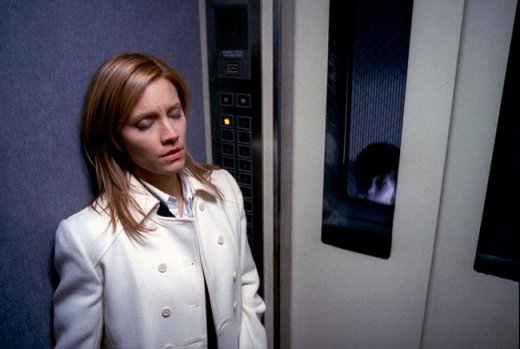
The Rage and Fury Omnibus, Part VI: "The Grudge 2" (2006)

Some sort of drama occurred between the release of the original "Grudge" here in the States and the production of this movie. Of course, the first movie was a huge hit by budgetary standards ($110 million domestic gross on a $10 million budget, which effectively makes it a huge winner), and the sequel was already in the works literally three days after the flick's release. Nobody could have foreseen just what would occur after that, as Takashi Shimizu spent more time than originally envisioned attempting to come up with an original story, and Sony Pictures attempted to get the funds and the cast together for the motion picture to come to fruition. Lo and behold, in October of 2006, we got "The Grudge 2." But is it any good?

Yes, it is. Not QUITE as strong as "The Grudge," or "Ju-On: The Grudge," but definitely a worthy addition to the series and a continuation of the incredible roll that the "Ju-On/Grudge" series found itself on in the early-to-mid portions of the ought decade. Takako Fuji is back, the cast is top notch (and everybody in this one really gives it their all), and more than anything else, it's just got that trademark "Ju-On" atmosphere.

If you read a lot of the external reviews (and why would you? You've got me, for Christ's sakes), a common theme to be found is that the storyline of this movie sucks, and that it's confusing to follow. Um, not really. If you give the film more than 10% of your active attention, it's pretty easy to place the converging pieces of the puzzle. More than anything else, unlike the recent blockbuster "Inception," this movie boasts one very complete moment during the film's climax that serves as a very clearly-defined "Ah, right!" moment for the audience when the timeline and the sequence of events becomes clear. It's always been my belief that when a film leaves the viewer going "huh?" when walking out of the theater, either the director or writer did something wrong. Not so here.

One guy that I didn't give enough credit (in fact, I didn't even mention his name) in the last review was Stephen Susco. Currently, he's attached to a reboot of "The Texas Chain Saw Massacre," and I for one am very excited about the prospects that brings, because this man did wonderful things to the "Ju-On" mythos in the first two American "Grudge" films. He kept the mythology almost identical, paid homage to the series' best moments without seeming like a downright ripoff, and added just enough of his own flair for story to make the films seem distinct. So five gold stars for Mr. Susco.

Also on display here is the AFOREMENTIONED awesome cast of legitimately good actors. Amber Tamblyn (TV's "Joan of Arcadia"), Arielle Kebbel ("American Pie Presents Band Camp") and Sarah Roemer ("Disturbia") are favorites of mine, and all play slightly more than two-dimensional characters. Tamblyn, in particular, is electric in this movie. Of course, I'm biased, because as someone who has gone through a sibling death it wasn't hard for me to relate to her character. Regardless of the context, I was mightily impressed with her here, and am mightily disdained that she's now dating my most hated comedian David Cross. Ugh. Well, anyway...Edison Chen is an actor who is unknown to me in roles other than this film, but all of his scenes in "The Grudge 2" are show-stealers as his nice-guy reporter character develops a rapport with Tamblyn, and makes the "get to the bottom of the mystery" portions of this film (the SIXTH TIME that loyal fans of this series have witnessed it) not boring. And, of course, it's got Takako Fuji back for another round of mayhem and maliciousness, so what more do you need?

Well, I know...you need some story.

In the same fashion as "The Grudge," the previous American film, "The Grudge 2" bobs and weaves between three different storylines, all taking place in entirely different time frames. The theme of this film is escalation; held in sequel context, this would be your dark "Empire Strikes Back" chapter of the "Grudge" saga (one that "The Grudge 3" wouldn't live up to, but more on that later). By the end of this movie, the curse has morphed in Sadako-like fashion from one continent to another, with the implication being that the K & T double-trouble combo are about to conquer the great, grand ol' USA...

Storyline #1: Aubrey's search for the truth
Aubrey Daniels (Tamblyn) is sent to Japan by her distressed mother to find her sister and bring her back home. Her sister, of course, is Sarah Michelle Gellar, a.k.a. Karen Daniels if you're interested in character names. It doesn't take long for Kayako to return, get tired of toying with Karen, and claim her as a victim in a very creepy hospital sequence and an iconic "maybe suicide" death. During the death (which Aubrey witnesses), she meets up with Eason (Chen), a reporter hot on the trail of the Saeki murders and their trail of murder and mayhem. In one of the most heartbreaking moments of the series, Aubrey (whose mother, by the way, blatantly favors Karen and makes no bones about her dislike for free-spirited Aubrey) follows Eason to the infamous Saeki house and watches him enter. Standing outside the front door, she suddenly finds herself "pulled in" to the house, almost as if by magic. It's one of the ways that this movie implies that the curse is getting stronger, and it succeeds in getting an "oh s**t" from the audience.

One BIG risk that both Shimizu (who returned ONCE AGAIN to direct this movie, as he had with all previous films) and Susco took with this film was to tackle the childhood of Kayako Saeki. The character had been the perfect image of pure evil thus far, and all we knew about her were the things that had either been shown to us explicitly or told to us by authority figures, and almost all of them related exclusively to the murders that launched the curse. This movie takes us all the way back to her very early days, and her time spent with her mother. I won't spoil these scenes, but the risk paid off. It adds an interesting dimension to the character of Kayako without killing the mystique, and also gives us a very cool and appropriate moment where Kayako gets sweet vengeance on Mama Saeki.

Storyline #2: The practical joke that doomed the world
Kebbel plays Allison Flemming, unpopular girl at an English-speaking Japanese high school. I don't know if Kebbel did it the old-school way and gained weight for this role or wore some padding, but she definitely looks the part, and plays it well. After all, this chick sported a smoking hot men's magazine body in her films both prior and after this, and it comes across realistic, so mucho points there. At any rate, two bitchy classmates take her to THE HOUSE (cue drumroll), which is now a derelict, and, of course, all three enter it, setting in motion the chain of events that would bring Kayako and Toshio to the United States. From the appearance of the house, it's clear that these segments take place well after the Aubrey segments, and in fact, they do - about two years afterward, to be exact.

This storyline gives us some excellent jump scares, and serve as the "creepy up" moments to pepper in between Aubrey's story and the slightly confusing Chicago segments. That guidance counselor scene? Masterpiece. In addition, we get a rarity for the "Ju-On/Grudge" franchise here - genuine "act as the villain" malice interest for the audience. We want to see the two popular c**ts who drug innocent Allison into the house bite the dust, and when Kayako gets them, it's poetic justice.

Storyline #3: Chicago, Illinois
Not as strong as the other two segments, mainly due to the fact that we have absolutely no clue as to what exactly is going on here until the very end of the film. At that moment of epiphany, however, these scenes begin to carry a lot of weight upon repeat viewings. Jennifer Beals (in yet another of this movie's great performances) plays a businesswoman newly married to the father of two children - hot girl Lacey (Roemer) and troubled Jake (Matthew Knight) - and has just moved in with her new family.

Weird things start piling up around the non-traditional family unit. Jake is awakened at night by loud knocking noises, presumably from the neighbor who just moved in next door (you know, the insane one). One very disquieting scene shows us Lacey's friend Sally (Jenna Dewan), suffering the effects of the curse, who begins downing milk, vomiting it up, and then drinking the liquid again. Ech. All of this builds toward the startling finale that shows us how these events are connected to the Saeki curse. What's even better, the ending scene is awesome.

As is this...

http://www.youtube.com/watch?v=Azu4oFXpUvw

To this day, that may be my favorite movie opening ever. It's amazing that Shimizu had the balls to do this with the legendary Columbia torch lady, but I for one am glad he took the risk. It's little touches like that which set the "Ju-On" and "Grudge" movies apart from other films; their sense of fun, their knowing campfire ghost-story feel and their propensity for clueing the audience in on the illusion while then proceeding to wrap each individual viewer up in it is second-to-none.

As for my favorite horror actress and villain, some of Kayako's best moments are from this film. The image of Kayako rising from the developer fluid toward Eason is something that will burn itself into your brain's permanent space, as are Karen's final moments and the death of both of Allison's tormentors. To date, this was the last time that Fuji would play Kayako, and the last that Shimizu would be behind the director's chair; she has stated that she would be willing to return to the role if Shimizu comes back to helm the series. Nonetheless, we need to pray for this to happen, because a final "Grudge" film would not be complete without Ms. Fuji behind the white face paint.

Overall, I couldn't have been happier with "The Grudge 2." It does what as sequel is supposed to do; it raises the stakes, and it isn't merely a repeat of the first film. At the conclusion of the movie, we even legitimately WANT to see a third movie, which seems to promise an epic, Stephen King-"Stand" style showdown of global proportions, with Kayako and Toshio as the new Grim Reapers of the world, and variable groups of survivors desperately attempting to save the world from its death sentence. This movie makes you conjure up that scenario, and as such, it can be nothing other than a major success. While the third film wouldn't deliver on that promise, this is nonetheless quite the awesome movie that holds up amazingly well with repeat viewings, and remains one of the best American horror movies of the '00s.

Friday, July 16, 2010

The Rage and Fury Omnibus, Part V: "The Grudge" (2004)

When someone dies in the grip of a powerful rage, a curse is born. The curse gathers in that place of death. Those who encounter it will be consumed by its fury.

It took 3.5 films, but writer-director Takashi Shimizu believed that he had accomplished everything he had set out to do with the Japanese “Ju-On” films. Thus, the only logical next step was to come to the U.S., remake his own series, and repeat the task in a bold new market. Either that or Sony Pictures offered him a ton of money, one of those two.

Well, however it happened (Brian Doyle-Murray in “Caddyshack,” thank you), in the year 2004, God himself manifested his holy powers in Columbia studios, and in human form with producer Sam Raimi, and the denizens of believers and non-believers began to see TV ads and trailers for this new nifty horror flick from those horror masters in Japan called “The Grudge.” Of course, since this was 2004, America hadn’t quite yet been bombarded with Japanified horror films quite yet; this was actually the FIRST in the wave of remakes of J-horror modern classics in the wake of the success of “The Ring,” and it’s still the best out of all the slightly dumbed-down long-haired ghost girl movies that the majority of the U.S. film fandom got sick of. Shimizu was brought back as director by Raimi, along with Taka Ichise (the producer of the “Ju-On” films). The movie itself is definitely one of the more faithful remakes you’ll ever see; a lot of the most memorable moments that I’ve described in the previous reviews are here, and in this regard, “The Grudge” won’t give you anything new.

That DOESN’T, however, lessen its impact or effectiveness. If anything, “The Grudge” is a kind of “best of” reel, incorporating tons of elements from “Ju-On: The Curse” and “Ju-On: The Grudge.” All of the back story stuff is redone pretty much scene-by-scene, as we get a pensive-looking Bill Pullman wandering around in place of teacher Kobayashi, and the horror-tastic elements are repeated from both films. All you really need to know, however, is that this is “Ju-On” in English, with a slightly higher budget (a modest $10 million; the film would gross more than $100 million, making it a huge success in ROI regards) and with Takako Fuji decidedly NOT going anywhere when her good friend Shimizu scored this cozy remake deal. That’s really the deal breaker, right there – take Fuji out of the equation, and this is just another ghost-girl film. With her, it’s electric stuff.

THE MOVIE!!

While not quite as Tarantino-esque as the “Ju-On” series, this is one of the rare remakes that doesn’t dumb itself down too much for U.S. audiences. It still tells its long story of woe (but not of Juliet and Romeo – God, I hate myself for writing that) in nonlinear fashion, shifting between three very distinct plots and somehow making it all come together in a non-confusing fashion (unlike this review).

Peter Kirk and the Saeki murders: Well, this is the one that introduces the film, so we might as well get on with it. Peter (Bill Pullman, aces in this role) is quintessential nice guy teacher that Kobayashi filled the role of in “Ju-On: The Curse.” Of course, if you’ve seen that film or read my review, you know that this is the character that Kayako falls in love with, leading to her untimely death at the hands of Takeo. The “Toshio” and “Kayako” chapters from that film are repeated pretty much verbatim here, but for the uninitiated, here’s a loose summary.

Peter becomes worried when he finds out that Toshio Saeki hasn’t been in class for several days. He makes a trip to Toshio’s house, finding the boy a shocked wreck and unresponsive. Eventually, he makes his way upstairs and finds the journal of Kayako, revealing that Toshio’s mother stalked – and was in love – with the married teacher. After finding the murdered body of Kayako, he attempts to carry Toshio out of the house, but is summarily consumed by the angry ghost of Kayako, beginning the grudge – the powerful curse of those who die with revenge and anger in their hearts.

One interesting thing to note is that in this version, it is explicitly spelled out that Takeo drowned Toshio in the bathtub, whereas in the Japanese films it is said – more than once – that the body of Toshio was never found, the implication being that Kayako actually claimed Toshio as her first victim. Another difference in regards to the original murder is that Takeo commits suicide after killing his wife and son; this is actually a change I don’t like, as it robs us of the emotional revenge on Takeo by Kayako that we get in “Ju-On: The Curse.”


The Williams Family: After the original murders and the Bill Pullman Incident, as it shall come to be known, a new family moves in to the Saeki abode – your American equivalents of Katsuya’s family from “Ju-On: The Grudge.” There’s husband Matthew (William Mapother), wife Jennifer (Clea DuVall) and mother Emma (Grace Zabriskie). The mother is immediately mortified of the house and clams up faster than *insert punchline here*, so it’s up to the rest of the family to carry this plot thread.

This is where a good deal of this movie’s jump scares take place, and in short, they’re excellent. The calling card of the “Ju-On” series was that these were movies that were master classes in how to executive jump scares without relying on cymbal crash-style sound effects; they drew out their “danger scenes” to the point of delirium before FINALLY giving us release. Of course, this whole familial unit is doomed; we know that from the start, but we’re given no less than three classic scenes in this segment of the plot. First is the wife’s death by Toshio. Second is the husband’s meeting with the ghosts. And the third is a FANTASTIC recreation of the “Hitomi” sequence in “Ju-On: The Grudge,” with KaDee Strickland doing an amazing job as Matthew’s incredibly bad luck-cursed sister who wanders into the house and spends the better part of five minutes of screen time attempting to escape from the onslaught of Saekis.

The social workers: I suppose one could say that this is your “main” story arc of the film. After all, it’s from here that we get the name above the marquee. Sarah Michelle Gellar plays Karen Daniels, your Rika Nishina character for “The Grudge.” She’s very likable, very kind, and a very good social worker who just so happens to get sent to the devil demon house from hell in the first fifteen minutes of this movie. After witnessing the final moments of Mama Williams, it’s up to Karen to get to the bottom of just what the frig is going on in abode Saeki. Much of it has been spelled out already – jealous husband murders wife and son in a rage and kills himself, causing a “curse” or “grudge” to develop and, in effect, damning everyone who crosses the threshold into the house. Including Karen.

This segment includes another instance of actually IMPROVING on a sequence from the original films. This movie recreates the infamous “torn-off Jaw” jump scare of doom from “Ju-On: The Curse”; now that scene is difficult to top, but nonetheless, they took it on. Due to a bunch of make-up and a higher budget, the scene is still laid out incredibly well, and still gets under your skin just as much as the original moment that made its way into your permanent memory.

What the movie leads to, of course, is a final showdown in the house between Karen (hoping to burn down the cursed house with gasoline) and Kayako. We’re given a slightly different ending than the one we got in “Ju-On: The Grudge,” and for what it’s worth, I think it really worked. Doing the exact same thing that we got in that monumental classic would have been a tall order to accomplish, and while I usually HATE the tactic, this is definitely a movie (and a series of movies, mind you) where doom-and-gloom “the villain is still out there” endings seem very appropriate.

Overall, this is definitely a remake that works. It takes the best parts of the previous movies in the series, and while some tweaks are slightly different (mostly in regards to the original murders), almost nothing is changed for the worse. It also creates enough of an identity for itself so as to allow for maximum impact (and sequels), and the acting…this might be one of the best-acted horror films of all time, bar none. Everyone in this cast was on top of their game, from Buffy to Captain Lone Star, and, of course, Fuji and Yuya Ozeki, who makes his third appearance as Toshio in this film. I don’t believe I’ve mentioned Ozeki yet in this series of reviews, but suffice to say, he does as amazing of a job as a cat-loving demon boy that could have possibly been done. Very impressive. This isn’t my favorite movie in the series, but it probably ranks a very respectable second, and in this series that’s a HUGE compliment.

Friday, July 9, 2010

The Rage and Fury Omnibus, Part IV: "Ju-On: The Grudge 2" (2003)

"Ju-On: The Grudge 2" (once again, just like the V-cinema films, known simply as "Ju-On 2" in many circles - but this indeed the FOURTH film in the series if you're keeping score, ladies and gents) is a pretty damn beloved movie. Many fans of the series consider it the absolute best film in the entire franchise, and for good reason. It's also the perfect capper to follow up the original "Ju-On: The Grudge" with. That film will leave you so hungry for more bob-and-weave Kayako action that another 92 minutes with the same main star and the same apocalyptic feel of the previous movie is the perfect way to sate your thirst.

I can definitely say it worked on me; hell, I watched this movie exactly 24 hours after my first viewing of "Ju-On: The Grudge." It didn't disappoint in the slightest; while not QUITE as strong as that incendiary classic, this movie has tons going for it. In the absolute simplest way I know how to put it, this HAS to be the best horror franchise of the 21st century, because I can think of no other series that featured a FOURTH film as good as this one. And we're talking GOOD good, not cheesy good ("Friday the 13th: The Final Chapter," I love you, but lord knows you ain't a Shakespearian epic). Yes, folks, this is a great movie. Perhaps not in the way that it should have walked away with a bagful of Oscars, but as both a continuation and a stand-alone story that's meant to creep the holy f**k out of you, there's few better than "Ju-On: The Grudge 2."

The story and slight effort to unconfuse you: The first two direct-to-video films focused on the first two families to call the cursed Saeki home, well, home. The third had another poor bunch of blood- and not-blood kin getting systematically butchered, along with a few ill-fated social workers meeting their ends at the hand of Superonryo and her son. By the time the events of this movie have rolled around, the house has been abandoned for many years, which is right where this story picks up.

The bookend story this time revolves around a pregnant actress named Kyoko Harase (Noriko Sakai, in an excellent performance). Kyoko makes an appearance on a Japanese variety show that specialized in haunted houses and other horror-tastic tales, and what better way to spike the ratings than visit a house where everyone who has ever entered dies a horrific death? Seems like a good idea to me. Hey, nobody ever said characters in horror films were Mensa members, and if they'd turned back at the front door to start the movie...there wouldn't be a movie, schmucks.

Anyway, if you've been following these things, the rest you know. Cast and crew of said show goes into house, only to be systematically slaughtered by Kayako and Toshio. The "Ju-On" experience has always been much more style than substance, however; its joys lie not in its minty freshness, but its creativity in springing its money scenes. In this regard, this is indeed the best movie in the series. The kill scenes in "Ju-On" films contain virtually no blood (well, with the exception of that "ripped-off jaw" scene in the original "Ju-On: The Curse," later cribbed for "The Grudge 1" in the States), but a lot of them have the genuine power to scare the crap out of anyone watching them for the first time sometime in the wee morning hours. The first time I watched this particular flick, I was amazed at Takashi Shimizu's ability to top himself with every one of the murder scenes. They're elaborately planned, well-paced and built-to, and paid off with perfection.

One thing, however, that stands in stark contrast to the previous film is the amount of screen time given to Takako Fuji and her amazing portrayal of everyone's favorite black-haired demon. In the previous film, her appearances (and it might not even need to be pluralized) were brief and scarce; this time, she's all over the place. Of all seven "Ju-On/Grudge" films with Fuji as Kayako, this is the one where she has the most face time, and she definitely makes the most of the opportunity. If you want to see Takako Fuji eating the souls of many, many unfortunate victims, and see it on the glorious big-screen, this is your bag, baby.

THE SEGMENTS

The movie begins with a pre-credits sequence showing Kyoko and her fiance Masashi driving down a lonely stretch of road. All appears innocent until Toshio makes a surprise appearance, forcing them off the road in an accident that effectively makes Masashi an invalid and seemingly kills Kyoko's unborn child. Or does it? Dun dun dun.

Kyoko: More of Kyoko's story, and unfortunately this segment kind of drags. The main gist of the thing is that Kyoko (known as the "Horror Queen" in her native Japan due to her propensity of starring in various horror flicks - I'd dig her if she was real) finds out that her previously-thought terminated pregnancy is in fact NOT terminated. So who or what is growing inside of her? There's a couple nice trademark "Ju-On" jump scares here, as well.

Tomoka: Now we're talking. Chihari Niiyama plays the title character, a sexy young TV show host who serves as our first lamb being led to slaughter in this go-round. And this...segment...is...awesome. Perfectly plotted, well-paced, containing a foreboding sense of dread and amazing payoff with one of the BEST, most imprinted images in all of the "Ju-On/Grudge" franchise. You don't mess with Kayako hanging two people with her demonic hair and Toshio playing around with the dead bodies like rag dolls.

Megumi: Another classic segment with a wonderful payoff. Megumi (Emi Yamamoto) is the hairstylist for the doomed TV show crew, and it's in this sketch where we see the actual taping of the show. There's one creeptacular scene where Kayako and Toshio - in human form - appear in the background behind Megumi and Kyoko, and the ending - the wig from hell - is once again an ingenious death scene.

Keisuke: Unfortunately, this is another segment that drags, and it's one with a character we don't really care about (even by the end of this part). More than anything, it's more exposition on Kyoko's pregnancy. Yup - creepy stuff is going on, we get it. Moving along...

Chiharu: Probably my second favorite segment in the entire "Ju-On" saga. It begins with an eerie tracking shot that seemingly follows the consciousness of Kayako roaming throughout Tokyo, and the rest of the segment is no less foreboding. Remember Izumi, the daughter of Detective Toyama from "Ju-On: The Grudge?" Well, now Kayako's after her friends. Chiharu is played by Japanese pinup idol Yui Ichikawa; she's fun to look at, but she's also really great at screaming. This part of the film is a mindf**k of Biblical proportions; Chiharu is shuttled in and out of realities with seemingly no pattern. The end result, of course, is that she's screwed.

Kayako: The third "Ju-On" film to have a "Kayako" chapter, and it's just as epic as the others. The entire movie has been building to the birth scene seen in so many romantic comedy and drama films...THIS, however, is a birth unlike any you've ever seen before, I'll tella you that much (Italian mode). What a rocking ending, and it even ends with the premeditated death of boring Keisuke. LOVE the ending, as well; it's tragic, it's sad, and it's ultimately VERY fitting, just as the ending of "Ju-On: The Grudge" was.

In a way, "Ju-On: Grudge 2" was the end of an era. It was, thus far, the final Japanese film to feature Kayako and Toshio before Shimizu would take this grand concept to the United States for even greater fame and fortune. It's also the highest-budgeted film in the Japanese series. Watching the movie in this regard, it's kind of sad; nobody had ever made J-horror movies of this nature before, with a singular sense of focus coupled perfectly with a nonlinear story. It's not quite as strong as "Ju-On: The Grudge," but as an opus for one of the most creative, incendiary chapters in the history of horror films, it's dynamite. As you can probably guess by now, a little over a year after the release of this film, "The Grudge" was released in the U.S. - in and of itself a glorified TRIBUTE to the four films that preceded it in the land of the rising sun. To me, truly a befitting honor for 3.5 classic films.

Friday, July 2, 2010

The Rage and Fury Omnibus, Part III: "Ju-On: The Grudge" (2002)

JU-ON: The curse of one who dies while in the grip of a powerful rage. It gathers and takes effect in the places where that person was alive. Those who encounter it die, and a new curse is born.

Well, if you're a devoted fan of all the crap that I post (all three of you), you know that I've already reviewed this movie - several times. I've harped about it on various message boards, I inducted into the International Horror Registry, and it's all for a reason. "Ju-On: The Grudge" (or simply "Ju-On" to many, and even "Ju-On 3" to Japanese audiences) is probably my second favorite horror movie of all time, one of my ten favorite FILMS in any genre, and still a flick that I can pop in any ol' time and either drift off to sleep or pay my full attention to, picking out various camera tricks and subtleties in character shifts that I had never noticed before. As an example, I just watched this film a few days ago, and I had never picked up on the fact that Katsuya (we'll be getting to him later) is acting like Takeo, and may in fact be possesed by him.

Information that you already know - this is the first "Ju-On" movie I ever saw. I don't count the first American "Grudge" film, since I was surfing the internet and playing "Castlevania" in the background at the time. It blew me away, and continues to blow me away. It's without question my favorite horror movie of the previous decade (which is called what, exactly? The Ohs? The oughts?), a horror film where all of the elements - acting, writing, direction - are firing on all cylinders. As with the previous movies, it's done in "short" form, with a series of six segments making up the flick's 90-some minute running time, but MUCH moreso than the direct-to-video "Curse" films, this is a movie where all of those parts add up to one unbelievable, cohesive WHOLE, better than any other movie in the nine-film franchise.

Another thing that leapt out at me a few days ago (as it has before) is just how LITTLE Takako Fuji is onscreen in this one. It's funny; Japanese audiences had to be expecting something pretty epic when the announcement came that these two cult favorite V-cinema films were being given the big bucks to make a fully-loaded theatrical movie, complete with all the production values and CGI you could ask for. No doubt they expected Kayako transforming special effects-driven monstrosities, bringing victims into some sort of web with her tentacles of doom, and whatever other crap I cam come up with running off three hours of sleep. Instead...she's shown INCREDIBLY sparingly, usually only for the money shots. In fact, I'd be willing to bet that the scariest cat in all of horrordom Toshio actually has MORE screen time than the all-time J-horror queen in this one. Most unexpected, and most effective.

Nope, what we get with "Ju-On: The Grudge" is a STORY, and that story is told in separate parts all adding up to one hell of an emotional wallop finale. The plot threads are separate but equal: Rika Nishina (Megumi Okina) is your Sarah Michelle Gellar character, the poor doomed caregiver who pays the visit to the house of death; we get the husband-wife-mother familial unit also cribbed for the first American remake, along with a sister who gets the movie's single best sequence; and there's the tragic case of the original Saeki murders' investigator, which picks up several years down the line.

Let's take a look at the segments that make up "Ju-On: The Grudge"...

Rika: As mentioned, this is your star character, and the inspiration for SMG's Karen Davis character. As played by Okina, she's sweet and charming, completely innocent and undeserving of the death sentence she walks into. The segment is classic "Ju-On" slow burn, all building up to the first reveal of Kayako - but not in the form we're used to.

Katsuya: This part is a double whammy; the main DEATH in this segment is Kazumi, the wife of Katsuya (a businessman). The Tokunaga family - complete with a mute mother-in-law who stays up till all hours of the night - make up the current residents of the ol' Saeki abode, meaning that their lease on life isn't very long. There's two great jump scares in this segment, along with yet more slow burn leading to the next chapter.

Hitomi: Oh yeah - my favorite chapter in the entire "Ju-On" saga, right here. ALSO cribbed for "The Grudge," Hitomi (Misaki Ito) is Katsuya's sister who had just arrived at their household at the end of the previous segment. No developments here - just one long execution, as both Kayako and Toshio pursue, torment, and eventually get this scared-to-death (and again, wholly innocent) victim. Awesome stuff.

Toyama: While it's a sort of sigh of relief after Hitomi's story, this one really kicks you in the nuts emotionally. Years after the original incident, Detective Toyama (Yoji Tanaka) is still haunted by the case of the Saeki murders. He has read the reports of the deaths cropping up, all with the house as the impetus, and resolves to burn the damn thing to the ground - of course, with disastrous results...

Izumi: At this point, the movie flashes forward several years. Toyama's daughter - a little girl in the last segment - is now in her teenage years. It was shown in the "Toyama" chapter that Izumi and her friends entered the Saeki house on a dare. This segment is similar to the "Hitomi" chapter, although it might be even scarier, because the extent that the curse has effected Izumi's life is shown in detail. Hell, this girl plasters newspapers on her walls - not to avoid looking out, but to stop things from looking IN.

Kayako: And this is where it all comes together. In the same time frame as the "Izumi" segment, we are shown Rika, several years after the incident at the Saeki house. She appears carefree and enjoying life, and then the things that haunted her several years ago come back. Tender, tragic, and emotional, this ending is pure perfection, and also gives us a very cool big-budget recreation of the "Kayako crawls down the stairs" sequence in the ONLY scene in this movie with a clear camera shot of Takako Fuji in the role!

Finally, there's that CLASSIC ending montage, showing one "MISSING" poster, and then another, and then another...and then the empty streets of Tokyo...

Overall, I can't say enough good about this film. It continues to amaze me every time I watch it, not only for its scare scenes, but its sense of FOCUS that is truly rare among J-horror films, and MOVIES in general. Writer-director Shimizu, given a large budget and stellar cast, could have settled for a cooler-looking version of "Ju-On: The Curse." Instead, we get a story that builds to a true heart-breaker of an ending, and the conviction - the feelilng that Shimizu KNEW what he was trying to accomplish with every scene and shot - shines through in vivid color. As such, this movie is absolutely essential for horror fans, and I wouldn't NOT recommend it to movie fans at large either!

Friday, June 25, 2010

The Rage and Fury Omnibus, Part II: "Ju-On: The Curse 2" (2000)

After "Ju-On: The Curse" (which was known as simply "Ju-On" when it aired on Japanese television, only adding layers of confusion to the cake already smattered with it) was such a massive word-of-mouth success, a V-cinema sequel seemed like a natural progression for creator Takashi Shimizu to follow. And lo and behold, a short time later (and proving that we Americans aren't the only ones who sequelize and bastardize our creations) along came "Ju-On 2" to TV screens in the land of the rising sun. What this movie is, in essence, is something else entirely - and according to some observers, it ain't even a sequel.

Here's the deal - I've scoured the internet (in a heart-wrenching, exhaustive search that lasted all of thirty minutes) for information on just how exactly this movie came to be, and why they chose to release "Ju-On 2" in the format that it has always known. Namely, a 76-minute film, with the first 30 MINUTES consisting of the final two segments of the original movie. Yup, while this movie is called "Ju-On 2," almost half of the freakin' thing is repeated footage that we just saw (and in the case of Japanese audiences, broadcast on television months earlier). A common theory that I've heard from more than a few casual watchers is that Shimizu shot all of the footage for the original two V-cinema films at once, only for the network to cut some footage from their final cut of "Ju-On: Curse 1." Then its popularity unexpectedly explodes, leading to some smart executive releasing the cut footage, along with the finale of the first film, as a "sequel." Seems like a fair shake to me. I've also heard theories such as government conspiracy, Kayako coming to life, and director laziness, but I'll stick with the original.

So yes, American DVD watcher, you get to use your Chapter Skip button a couple times after popping this bad boy in the DVD player. I'm reacting to this movie based on the stuff that I HADN'T seen before. In all seriousness, the "cut footage" theory makes a ton of sense; the four original chapters in this film look virtually identical in visual style to the original "Ju-On," and characters from that film appear in this one. By and large, the stories are much SHORTER this time - the last two are, at max, five minutes each (although one of them is the most memorable scene in the entirety of the two direct-to-video "Ju-On" films; more on that later). If indeed they are deleted scenes, they were deleted for a reason; the stuff contained in "Ju-On 2," while memorable and occasionally scary, is nowhere near as strong as the slow-burning story that was "Ju-On: The Curse."

How's that for an introduction for what amounts to a 46-minute short film with a VERY long lead-in from the previous movie?

THE MOVIE!!

If you haven't deciphered it by now, this movie is very similar in style to the previous entry. Its structure is broken up into character-focused chapters (and I'm absolutely positive I've used that exact phrase in these reviews before - so sue me, I'm an idiot who isn't creative about coming up with new ways to say the same thing). If you'll recall from the original film, we were shown the origin story of Kayako Saeki (Takako Fuji, once again marvelous in the role, although more sporadically used here) and her son Toshio, two VERY pissed-off ghosts who harbor all sorts of ill will for anyone who enters their home. An entire family was butchered in that film, which ended with a new family moving into the ol' Saeki abode in Nerima.

This movie focuses on that family, along with several police officers involved in the case, the psychic from the previous movie who accompanied her realtor brother along to the sale of the home to this film's family, and, amazingly enough, several others. As you should know by now, "Ju-On" films are far less about their coherent story than they are about their creation of mood and an almost impenetrable sense of dread; the first movie established the template that all of these people we meet are already screwed. The genius is in (a) the buildup, and (b) the payoff, which series creator Takashi Shimizu knows how to give like perhaps no other horror director I've seen. His jump scares aren't the lazy variety "loud noise" sound scare stinger; instead we are SHOWN horrific, creepy, crawly things when we least expect to see them, and are startled not by a movie theater or surround sound system, but by our optic nerves, and what we perceive as a threat. Since these movies still boast Kayako and Toshio, two of the best threats in horror film history, there's still some good nightmare-inducing moments to be hand here, albeit less frequently than its predecessor.

With that, we're going to try something different - small chapter-by-chapter reactions. Both because they should be entertaining and economical, and secondly because I'm already stumped as to how to continue ladling words on this series.

Tatsuya: Unfortunately, this is a segment that was deleted from the original movie for a very good reason. Namely, it's long, boring, and just not very scary. Tatsuya was a minor character from the original film (the AFOREMENTIONED realtor who accompanies his psychic sister to the Saeki home), and as such, already has the curse. Unfortunately, his sister is much worse for wear. Both Tatsuya and his sister meet their end in this segment, but with the exception of Toshio's cameo, it's just not very interesting.


Kamio: This is the "police procedural" segment of this film, as all the mounting death has begun to scare the bejesus out of the original investigators of the Saeki murders. Again, not a terribly original, scary, or interesting chapter, and just like the Tatsuya segment, it's LONG.


Nobuyuki: Now we're talking - this is the (AFOREMENTIONED) single most memorable sequence in the two direct-to-video films. Nobuyuki is Tatsuya's son, now pensive and withdrawn at school since the death of his father. His classmates are in the process of mocking him when he sees the ghostly form of Kayako outside the school window...and literally ten seconds later, his whole world turns upside down. This segment is less than two minutes long, but it devastates. It also gives us Kayako running after her victim on her hands and knees; it is indeed quite awesome what Fuji can accomplish with her body.

Saori: Again, very brief, but effective. The two families from these original films now dead and gone, some teenagers have taken it upon themselves - perhaps via a dare - to enter the house. And then the screaming starts...

All in all, not a bad batch of stories. What drags the rating down is the fact that the slow-burning entries just really don't burn all that much; meanwhile, the VERY BRIEF segments stick out in your mind long after hitting the EJECT button on your DVD player.

So closes the non-theatrical portion of the Japanese "Ju-On" series. Despite the second film's shortcomings, both in the scare factor and in runtime, it's easy to see why these things gained such a large fan following. The first Japanese theatrical film, which would be released about three years after this particular film aired on TV, boasted a built-in audience that had hotly anticipated seeing Kayako, Toshio, and the trademark creepiness of Shimizu's writing and directing style for years. Also, this film is pre-packaged with the first film in a "two-movies-on-one-DVD" combo pack (or at least that's what I personally own), so you won't be going out of your way to watch the new stories in this one. It's already there.

Friday, June 18, 2010

The Rage and Fury Omnibus, Part I - "Ju-On: The Curse" (2000)

JU-ON: A curse of one who dies with strong resentment. Accumulates in the place where the dead were while alive, and turns into "karma." He who comes in contact with the curse loses his life, and a new curse is born.

You know, I still remember the night that I saw my first "Ju-On" film. Believe it or not, it was only a (comparatively) short time ago - the summer of 2008, to be exact. I'd just discovered this different, vast, heavily populated by female ghost genre called J-horror, and two of the first movies that got my Amazon buy were "Ju-On: The Grudge," Parts 1 and 2. Of course, back then, I had no idea that these movies were actually the THIRD and FOURTH movies in a franchise; all I knew was that I'd half-watched "The Grudge" a few years ago, and that this was the original version. I paid exactly $8.19 for those two films, shipping included.

I popped the DVD in sometime around 1:00 in the morning. Normally, I'd give new horror movies 75% of my attention; the remainder of my brain was occupied with either internet surfing or this crusty, ancient Casino game on my laptop (that still gets heavy use to this day). That night, however, the computer didn't even get a look; from the moment the movie started, I knew I was watching something special. The characters leapt right out of the screen; virtually nothing about them is known with the exception of what is shown. The movie ticks by in a series of "Chapters," the character-names serving as de facto short stories, their names spelled out for us like an obituary. This was one of the DARKEST movies I'd ever seen, but strangely enough, its bleakness was refreshing. Engrossing, even. Of course, it also doesn't hurt when you've got the coolest villain to come along since Freddy Krueger, but you get the gist of this story by now. "Ju-On: The Grudge" instantly became one of my favorite movies, and I spent the better part of the next two months seeking out all of the other films, both Japanese and American. I'm still not bored with them. Those two movies that I bought for the price of a Perkins Supreme Burger have gotten constant airplay in my DVD player, keeping me interested in active watching sessions, lulling me to sleep like a comforting blanket during the night.

Which brings me to this film - "Ju-On: The Curse." THIS is where it all began, ladies and gents. A micro-budgeted film shot on digital video for Japanese television, based on two popular segments from a Japanese horror anthology TV series. These segments were shot by a young wunderkind named Takashi Shimizu, himself a student of J-horror great Kiyoshi Kurosawa. Shimizu's style is distinct; rather than tell long stories, he splits his "Ju-On" films (and to a lesser extent the American "Grudge" films) into interconnected segments, all connected to a house that equals death and two ghosts who spell vengeance. As can be expected of a franchise that now totals nine films, the flick was infinitely popular on Japanese TV, garnering fantastic word-of-mouth for its acting, truly brutal ghosts, and one-of-a-kind villains. As a movie, "Ju-On: The Curse" is damn near perfect. This movie is SLOOOWWWW BURNNNN, baby. The tension builds and builds and builds through many of the segments, FINALLY releasing it in the moments before the screen goes black and the next doomed character is introduced. In short, this movie is a damn fun time.

THE MOVIE!!

Explaining the plot of a "Ju-On" film is a challenging experiment. In short, the movie isn't focused in the slightest on plot. The formula is in place for the rest of the series, though, in this first entry: introduce a character, show character in peril, kill character, usually with a phenomenally well-executed jump scare. The first story is focused on a teacher named Kobayashi - nice young man, all things considered, and played very well by Yurei Yanagi of "Ringu." Kobayashi has a very pregnant wife and a deep concern - one of his students, Toshio Saeki, hasn't been to school in over a week. And so Kobayashi makes the fateful journey to the house...

See, there's a house in Tokyo that nobody should EVER go into. This film shows two unfortunate families that have the AMAZINGLY bad luck of moving into the house, and through its interconnected stories, virtually EVERYONE connected to the house...police officers, family members, friends...winds up dead. This house is what the title of the movie is all about -Ju-On, the powerful pall of people who die in violent circumstances, often with rage in their hearts.

There indeed seems to be a lot of rage present in this movie. "Ju-On" is very much a J-horror movie, with ghosts as villains and a decidedly non-gory tone, but this is something like the slasher movie of J-horror ghost films. We get many characters in this movie, and a lot of them are teenagers. Even better, most of them are attractive females, just like the countless '80s slasher films with masked killers. The most striking death in the entire film is the first true onscreen murder of young Yuki (Hitomi Miwa). Finding herself alone in the house after being called over to tutor, she walks out into one of the creepy upstairs hallways only to find it completely dark, and suffocatingly alone. She is chased by a cat into a closet where a hole in the ceiling is present. Yuki investigates the hole, only to come face-to-face with a yet-unknown white-faced woman...and then we hear the croak for the first time. Awesome stuff in a movie full of it. In addition to that death, there's the infamous "ripped off jaw" sequence that the 2004 American remake cribbed, and the girlfriend of one of the house's inhabitants (Chiaki Kuriyama, Go-Go of "Kill Bill" fame) meeting a sinister kid who bears a striking resemblance to Toshio.

All of these bizarre crimes come together in the "Kayako" segment of the film, which also gives us the climax of Kobayashi's story. You see, Kobayashi knew Kayako (played by Takako Fuji, who absolutely DEVASTATES in this role, making this character just as much her own as Robert Englund did with Krueger) in college, and now she just so happens to be Toshio's mother. Finding the house empty except for Toshio, Kobayashi makes his way upstairs and finds a journal that answers all of his questions. Kayako is unhappily married, in love with Kobayashi to the point of delirium - even to the point of stalking. Mere hours before his arrival at the house, her husband Takeo (Takashi Matsuyama) - a violent, jealous man - found the journal, and brutally murdererd her, slicing Kayako's throat. As it turns out, Toshio himself is a ghost as well, inviting Kobayashi into the game to give Kayako's story a sense of closure. The mother-and-son duo are the villains of this film - one a powerful Onryo ghost, the other a playful and sinister child of death. It is shown that Kayako actually claimed Takeo as her first victim, and all the other poor souls in this film are flies to this pair.

While the story (which probably isn't explained very well) of "Ju-On: The Curse" is interesting and involving, make no mistake, this is a movie that works because of its villains. In creating the characters of Kayako and Toshio, Shimizu struck gold that would launch him to superstardom and enough money to buy his own solid gold island. In addition, the casting of Fuji - a veteran theatrical actress and trained contortionist - was a stroke of genius rarely seen in the movie world. In all six films that Fuji would portray the character, she gave the character such an eerie presence, a menace almost completely alien to American movie audiences...the feeling that this person, even in death, wanted to do bad, bad things to people whose only sin was crossing the threshold into her former home. Her trademark death rattle - a kind of "croaking" sound, eerily reminding us of the way she met her death - became the Japanese equivalent of Jason's legendary "Ki ki ki ma ma ma" chant. At any rate, five gold stars for Ms. Fuji and Shimizu's creation of the character.

Amazingly enough, this whole sad, sad affair would only get better as it went on. It would reach peaks and hit a valley, but as the introduction to a legendary curse, "Ju-On" in its original V-cinema form is essential viewing. What it lacks in speed it more than makes up for in its ability to get under your skin and burn itself into your cerebral cortex, likely in the moments when you REALLY don't want those kind of thoughts in your mind...

Friday, June 11, 2010

IHR induction #29: "Tomie" (1999, Ataru Oikawa)

Japanese horror. Say those two words to any self-respecting horror fan, and you're likely to get an emotional reaction - extremely positive or extremely negative, with no middle ground. To be sure, there are plenty of fans on the other side of the fence from yours truly. Google some reviews of J-horror classics, like "Ju-On" and "Ringu," you're likely to find more than a few auteurs who are very fond of words like "slow" and "plodding." To them, the deliberate and sure-handed pace of Japanese horror films is viewed as the cinematic equivalent of the Bubonic plague. It seems that we, as American movie watchers, are accustomed to the Michael Bay school of film - namely, there better be something flashy or loud happening, and it better be happening RIGHT DAMN NOW. As such, these reviews reflect that expectation.

As you can no doubt ascertain, I fit into the former camp. Joe Bob Briggs was the driving force that introduced me to horror films, meaning that I watched a lot of slasher and monster movies as a teenager. And yeah, those are all well and good for about ten years...but after that, I wanted something more. Something DIFFERENT. Japanese horror movies are extremely different from those in the great, grand US of A. For starters, many of the best-known villains in J-horror are FEMALE, which is something extremely rare in and of itself in American movies. The concept of the "Onryo ghost" is one with a long folkloric tradition in Japan, much like the urban legend is here in the States that gave rise to the masked killer and the teenage slasher film. More than anything else, however, Japanese horror films are much more inclined to focus on the creation of MOOD. You might not get the money shots that you get in a U.S. horror film, but you will most definitely wind up with some stuff that gets you conjuring up things in your own subconscious that creeps you the f**k out.

Put simply, I enjoy American and Japanese horror films equally...but if you're like I was three years ago, a hardcore slasher and serial killer movie fan who was looking for something, ANYTHING different to break me out of the nonstop parade of fornicating teens and artfully-created gore scenes, give Japanese horror a shot. The focus on character, leisurely pace, and emotional resonance should be the breath of fresh air that you need. And while there are movies from the land of the rising sun that I enjoy more than "Tomie," this is a movie that serves as a good introduction to the genre of J-horror, with the title character serving as one of the "unholy trinity" of female Japanese horror villains, along with Sadako Yamamura of "Ringu" fame and Kayako Saeki of the "Ju-On" films.

Tomie Kawakami is a very beloved character in the Pacific Rim. It was introduced by writer Junji Ito in an insanely popular series of Manga comic books all focused around one theme - a title character who cannot die. In Tomie, Ito struck gold. It is never spelled out exactly for us just WHAT Tomie is. All we know is the reaction that she inspires in those around her. Every male she comes across falls in love with the beautiful vixen, while every female becomes pathologically jealous of her. Invariably, those around her begin a very disturbing trend - murdering the girl of their dreams/source of their envy, only, like the proverbial cat who came back the very next day, Tomie soon regenerates and resurfaces in the person's life, slowly driving them insane. This notion of a girl who could not die really struck a chord, and with kids in Tokyo lapping this s**t up, it seemed like only a matter of time before this strange mix of a seductress and demon made its way to the big screen.

"Tomie" is the first film in a LONG series, although, much like Takashi Shimizu's benchmark "Ju-On/Grudge" series, we've gotten absolutely peppered with a bevy of films in a short span of time (eight films in eight years). Although unlike Takako Fuji's dynasty playing Kayako, we've had a different actress playing Tomie in each and every film. The series goes through some definitive peaks and valleys, and Takashi "Everything I Touch Turns to Gold" Shimizu himself directing one of the sequels. Despite Shimizu-san's "Tomie: Re-birth" being technically the best film of the bunch, my heart stays with the original movie. It's got the best balance between creepy, realistic stuff, and flat out-there fantasy, and remains the definitive Tomie film.

This movie follows Tsukiko (Mami Nakamura), a young student with amnesia. While she is living a normal life in the present day with her live-in boyfriend, her entire life from her high school graduation backward is a blank. Tsukiko is attempting to reclaim the memories with the help of her psychologist, who, in a GREAT early scene, is grilled by a fierce, hot-tempered Detective (Tomorowo Taguchi) who tells the psychiatrist about countless deaths linked to the name "Tomie Kawakami." Of course, since "Tomie" is the name of this movie, we can guess that Tsukiko's amnesia is linked to Tomie in some way, which is only confounded by some of the other strangeness going on within this story.

Like the strange man who has just moved in below Tsukiko. Carrying a box, and looking like a goddamned serial killer, this guy instantly creeps us out from the moment we see him. Whatever is inside that box is something truly monstrous, as we see him feeding it bugs, talking to it as if it is a human being, and being...entirely too nurturing of the godforsaken devil box. What's inside, of course, is the head of Tomie Kawakami, the victim of apartment renter from hell, who is now nursing his beloved Tomie back to health. And she has already begun to regenerate her body. As it turns out, the location of the apartment isn't an accident, either...

As you can see from those above two paragraphs, there are a lot of subplots in "Tomie." Director Ataru Oikawa pays each one with the respect it deserves, as we see the Detective's obsessive search for Tomie that may belie some kind of death wish, the philandering adventures of Tsukiko's cheating boyfriend, the regeneration of Tomie - who, by the way, is masterfully played in this first go-round by Miho Kanno, and ranks as the second best Tomie in the entire series behind Miki Sakai's version of the character in "Tomie: Re-birth" - and her seduction of the aforementioned cheating boyfriend, and the recovery of Tsukiko's memories. Tsukiko's back story with Tomie is saved as the final revelation of the movie, in a long, drawn-out monologue delivered from Kanno to Nakamura, and it's in this scene where Kanno earns her keep as "one of the two best Tomies." She may be a soul stripper, she may be a demon, but dammit, we feel sorry for her that her friends betray her and kill her. As such, the final twenty minutes of "Tomie" are some very electric stuff; there's some good gore, a few timely surprises, and an EXTREMELY disquieting scene where the headless body of Tomie exits its grave and eerily walks toward Tsukiko, who was in the act of burying her former friend.

Reading this review, you've probably decided if "Tomie" is for you or not. To be sure, this ain't a horror movie for everybody. You won't find much in the way of out-there murder set pieces, fornicating teens (although there is some nudity; Tsukiko has a hot model friend who serves as one of Cheating Boyfriend's conquests, and she is SSSSSMOKIN') or by-the-numbers plot. If you're like me, however, and appreciate a good, solid build to every character, an attention to the importance of dialogue in advancing a story, and the craft of building a mystique and mysticism to a main villain character before it FINALLY makes its unexpurgated appearance, you won't be disappointed by "Tomie." In fact, you might even be tempted to seek out the rest of the series on Amazon.com, where a box set of the first five films is readily available for the price of a McDonald's value meal.

One final word - in a day and age in which we J-horror fans immediately have the sinking feeling that ANY film we enjoy from across the Pond is going to be remade here in the States, I believe that this is a movie that is virtually remake-proof. It has absolutely no commercial opportunity here in the States, and movie executives realize that...so rest easy, fellow fans of the original versions of "Shutter" and "A Tale of Two Sisters" who feared the same fate for Ms. Kawakami. It ain't happenin' anytime soon.